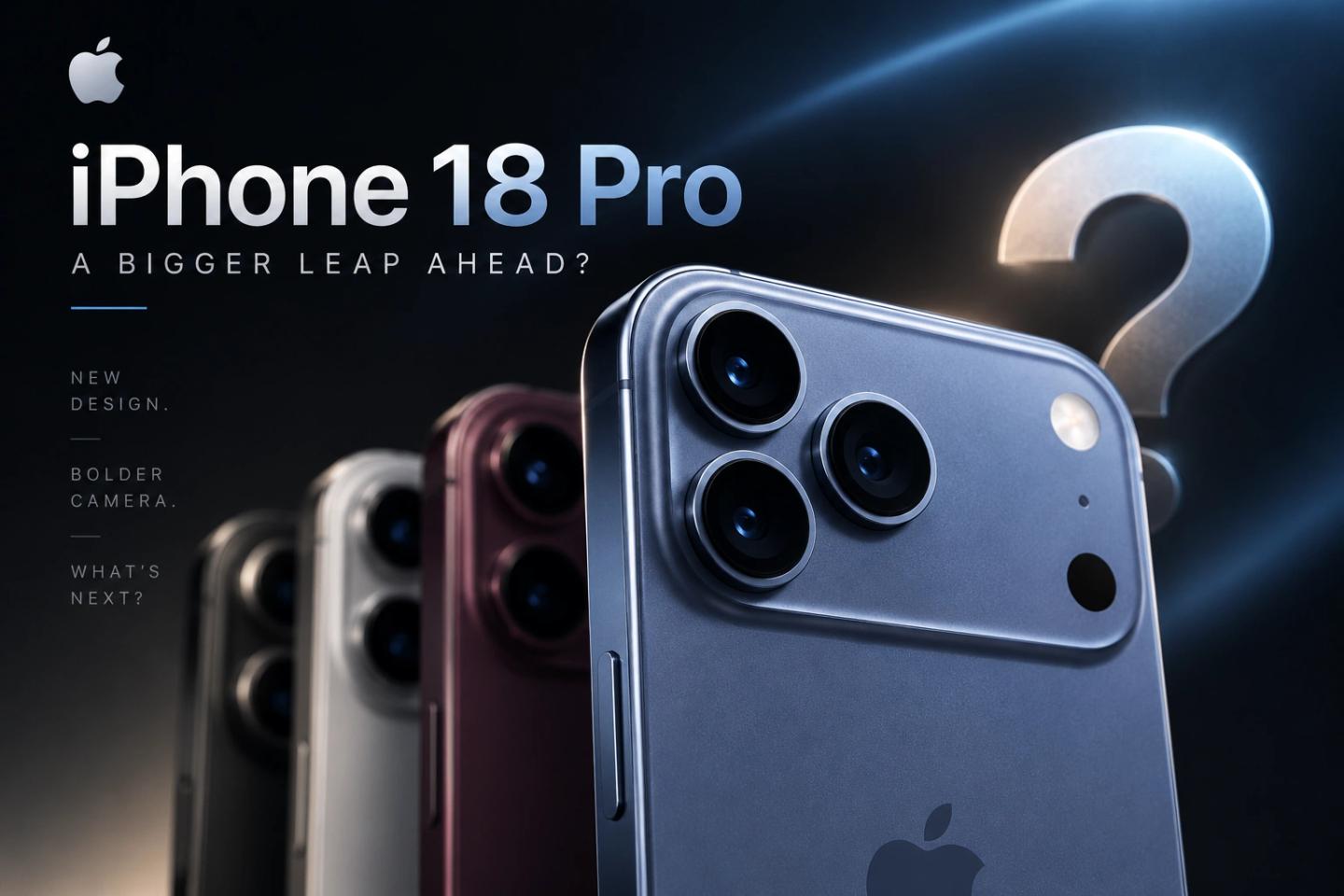
Apple’s iPhone 18 Strategy Shift: A20 Silicon, Variable Aperture, and a Split Launch
Apple is gearing up for its annual fall hardware showcase on September 9, 2026, with the iPhone 18 Pro lineup set to headline the event. However, industry supply chain trackers indicate a potential shift in Cupertino's release cadence: while the flagship Pro models are slated for their standard autumn debut, the baseline iPhone 18 may not hit retail shelves until early 2027.
The staggered launch strategy reflects Apple's growing differentiation between its standard and pro-tier hardware, driven primarily by the escalating resource demands of on-device artificial intelligence.
Under the Hood: Next-Gen Silicon and Memory Standards
At the center of the iPhone 18 Pro architecture is the new A20 Pro chip, fabricated on TSMC’s advanced 2-nanometer node. The die shrink promises significant thermal efficiency gains alongside raw computing leaps.
To handle local execution of complex multi-modal AI models without relying constantly on cloud processing, Apple is making a long-overdue system memory upgrade:
- 12GB RAM Standard: Moving up from previous 8GB configurations to ensure local context persistence for background tasks and local generative tools.
- A20 & A20 Pro Split: The base iPhone 18 will eventually receive the standard A20 silicon, while the Pro variants get the uncapped A20 Pro die with higher GPU core counts.
Camera Mechanics and Display Architecture
Hardware leaks point to one of the most substantial primary camera overhauls in several generations: a main sensor featuring a mechanical variable aperture. This physical shutter control allows the lens to dynamically adjust light intake, granting photographers true optical depth-of-field control rather than relying solely on computational software blurring.
Front-facing hardware is also seeing an overhaul. Apple is working to migrate several Face ID components directly underneath the OLED panel, allowing engineers to visibly shrink the Dynamic Island cutout for a higher usable screen-to-body ratio.
iOS 27 and the AI Core
The hardware suite will ship alongside iOS 27, built from the ground up around a rebuilt, context-aware Siri. Moving past basic voice commands, the updated assistant leverages the extra memory bandwidth to offer deep cross-app automation, complex text editing, and real-time visual analysis directly on the device.