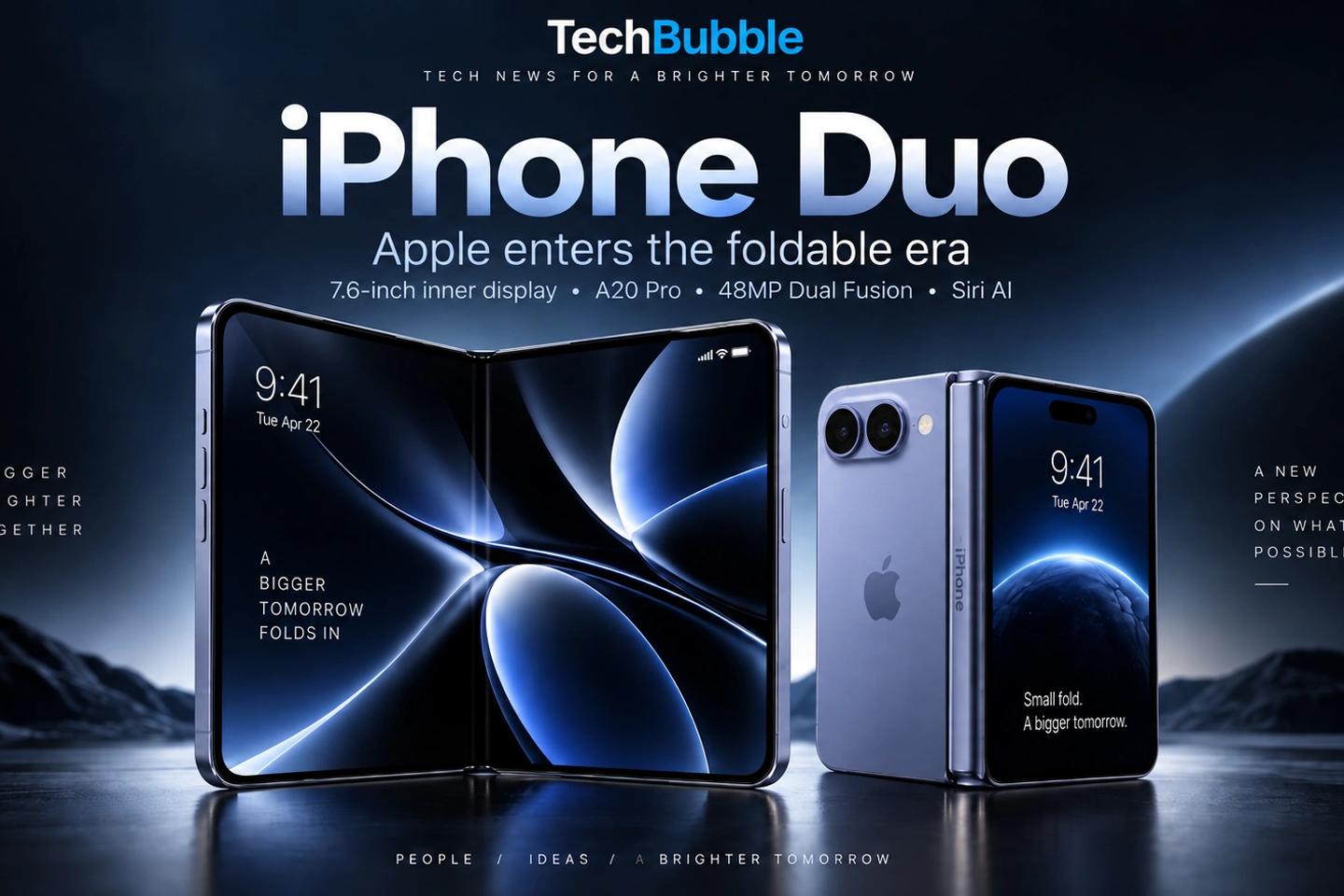
Apple Enters the Foldable Era: iPhone Duo Redefines What a Smartphone Can Be
A bigger screen, smarter AI, and a new vision for the future of mobile computing
For almost two decades, Apple has followed a simple philosophy: don’t be the first — be the best.
The company waited while competitors experimented with foldable smartphones, watched the market evolve, and finally introduced its own interpretation of the future.
Now, Apple has officially entered the foldable phone era with the iPhone Duo — a device that combines the portability of an iPhone with the experience of a small tablet.
But iPhone Duo is not just another foldable smartphone.
It represents something bigger:
Apple’s attempt to redefine how people interact with mobile technology.
The First Foldable iPhone: Two Screens, One Experience
The biggest change is obvious the moment the device opens.
The iPhone Duo features a 7.6-inch inner display, creating the largest screen ever placed on an iPhone. When folded, users get a compact 5.4-inch outer display designed for everyday tasks.
Unlike traditional foldable phones that feel like two separate devices connected together, Apple focused on making the transition between screens feel natural.
The same content can adapt between folded and unfolded modes, allowing users to:
Watch videos on a larger canvas
Run two apps side by side
Browse websites like a tablet
Take notes using Apple Pencil support
Play games with a more immersive experience
Apple’s goal is clear:
Make a foldable phone that feels like an iPhone, not a science experiment.
A20 Pro Chip: Preparing the iPhone for the AI Era
The smartphone industry is moving toward artificial intelligence, and Apple knows hardware power will become more important than ever.
The iPhone Duo comes with Apple’s new A20 Pro chip, designed to handle demanding tasks such as:
On-device AI processing
Advanced photography
Gaming
Multitasking
Real-time intelligence features
The chip also introduces improved thermal management to maintain performance during heavy workloads.
This matters because future smartphones will not only run apps — they will actively assist users.
Siri Gets a New Brain
For years, Siri has been criticised for falling behind competitors in artificial intelligence.
Apple is trying to change that.
With the new generation of Apple Intelligence and Siri AI, the company is moving Siri from a simple voice assistant into a more personalised digital companion.
The new Siri can understand:
Personal context
Information across apps
On-screen content
User requests with more natural conversations
For example:
Instead of asking:
“Find my flight email”
Users can ask Siri to locate information, understand context, and take actions across different apps.
Apple is also keeping privacy as a major selling point by focusing on on-device processing and Private Cloud Compute.
The Camera Revolution: Foldable Design Creates New Possibilities
The iPhone Duo’s camera system is not only about better sensors.
The foldable design creates completely new ways to capture photos and videos.
The device includes a 48MP Fusion camera system and introduces features designed specifically for the foldable form factor.
Some notable camera experiences include:
Smart Take
The phone can automatically capture moments when people are ready, reducing missed shots.
Duo Preview
Subjects can see the camera preview on the outer display, making group photos easier.
Hands-Free Shooting
The folded design allows users to position the phone without additional accessories.
Apple is turning the foldable structure itself into a camera advantage.
iOS 27: Software Designed Around Folding
A foldable device is only useful if the software understands the new shape.
Apple redesigned iOS 27 specifically for the iPhone Duo.
The new experience focuses on:
Split-screen multitasking
Better app positioning
Flexible orientations
Improved StandBy mode
The phone can transform into a:
Digital photo frame
Smart display
Productivity device
Entertainment screen
The idea is simple:
Your phone should adapt to you, not the other way around.
Why iPhone Duo Matters for the Smartphone Industry
The smartphone market has reached a point where yearly improvements feel smaller.
Better cameras.
Faster processors.
Slightly longer battery life.
Consumers have started asking:
“What comes next?”
Foldable phones could be the answer.
Apple’s entry could accelerate adoption because millions of users trust the iPhone ecosystem.
Historically, Apple has not always invented categories — but it has often transformed them.
The iPhone did not create smartphones.
The Apple Watch did not create smartwatches.
AirPods did not create wireless earbuds.
But Apple’s execution helped make these products mainstream.
The Challenges Ahead
Despite the excitement, iPhone Duo faces important questions.
Price
Premium technology comes with a premium cost. The device enters the market as one of Apple’s most expensive products.
Durability
Foldable displays remain technically challenging. Hinges, screens, and long-term reliability will be closely watched.
Consumer Need
Many users may still ask:
“Do I really need a foldable phone?”
Apple’s biggest challenge is not building the technology.
It is convincing people that the technology improves their daily life.
The Future Apple Is Building
The iPhone Duo is more than a new product.
It is Apple’s statement about the future of computing.
The company believes the next generation of devices will not simply become smaller or faster.
They will become:
More intelligent
More flexible
More personal
The smartphone may no longer be just a device we hold.
It may become a digital companion that understands, adapts, and works alongside us.
With iPhone Duo, Apple is asking the world a new question:
What if your phone could become whatever you need it to be?
And that question may define the next decade of mobile technology.