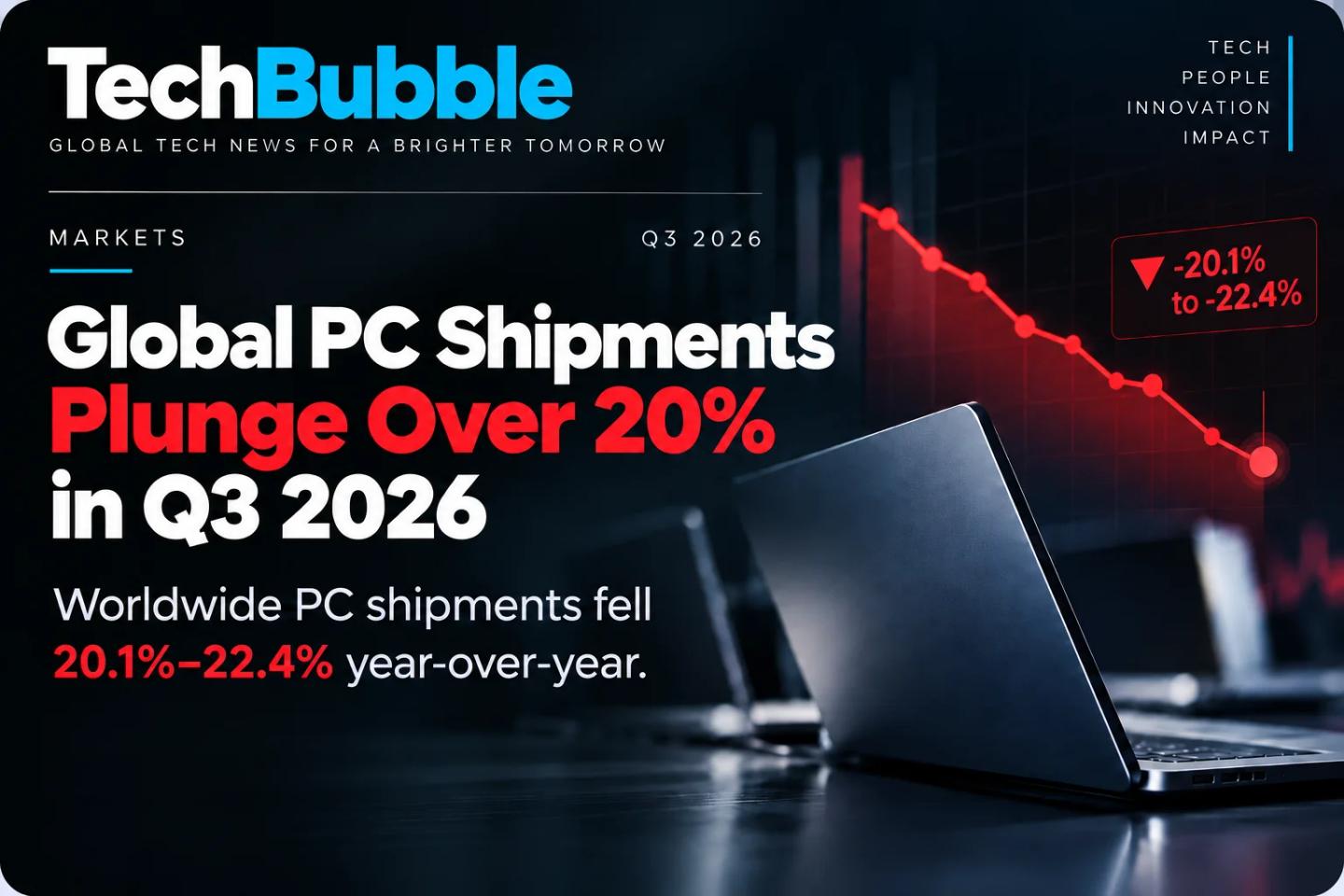
Global PC Shipments Plunge Over 20% in Q3 2026: Is the PC Industry Entering a New Era?
The personal computer industry has survived countless technology revolutions from the rise of smartphones to the cloud computing boom.
But the latest numbers reveal a challenge unlike anything the market has faced before.
Worldwide PC shipments dropped between 20.1% and 22.4% year-over-year in the third quarter of 2026, signaling a major shift in the global computer market. What was once considered an essential yearly upgrade cycle is now becoming a much slower and more selective purchasing decision.
The decline raises a bigger question for technology companies:
Are people buying fewer computers, or are they simply expecting computers to become something completely different?
The Global PC Market Is Facing a Structural Change
The decline in global PC shipments in Q3 2026 is not caused by a single problem.
Instead, multiple forces are reshaping the PC market in 2026, including longer device lifespans, economic pressure, changing consumer habits, and uncertainty around the next generation of AI-powered computers.
For years, PC manufacturers relied on a predictable cycle: introduce faster processors, better displays, and improved designs, then encourage customers to upgrade.
That formula is becoming weaker.
Modern laptops are already powerful enough for most everyday tasks. A computer purchased several years ago can still handle browsing, office applications, online meetings, entertainment, and basic creative work.
For many users, the question is no longer:
"What is the newest laptop?"
It is:
"Does the new laptop offer something my current device cannot do?"
Consumers Are Delaying PC Upgrades
One of the biggest reasons behind the PC market decline in 2026 is the changing replacement cycle.
Previously, consumers often upgraded computers every three to four years. Today, many users are keeping their devices longer because performance improvements have become less noticeable.
A mid-range laptop from previous generations can still deliver acceptable performance for millions of users.
This creates a difficult situation for manufacturers such as laptop and desktop PC makers. They must convince customers that upgrading is not about faster hardware alone — it is about a completely better computing experience.
Economic Pressure Hits Computer Demand
Global economic conditions have also affected the worldwide computer shipments market.
Consumers facing higher costs for housing, food, education, and daily expenses are becoming more careful about large technology purchases.
Businesses are following a similar approach.
Many organizations are extending the lifespan of existing computers instead of replacing entire hardware fleets. Companies are focusing spending on areas that provide immediate business value, including cybersecurity, cloud services, and artificial intelligence tools.
The result is a slower PC replacement environment across both consumer and enterprise markets.
AI PCs: The Industry’s Biggest Opportunity
While traditional PC demand is slowing, manufacturers are betting heavily on one major opportunity:
Artificial intelligence computers.
The rise of AI PCs is expected to become one of the biggest trends shaping the future of personal computing.
New AI-powered computers include dedicated neural processing units (NPUs) designed to run artificial intelligence tasks directly on the device.
These systems promise:
- Faster AI applications
- Improved productivity tools
- Enhanced privacy through local AI processing
- Smarter automation features
- Better creative workflows
However, the challenge is adoption.
Many consumers understand the concept of AI, but they are still asking an important question:
“Why should I replace my current laptop just because it has AI features?”
The success of the AI PC market growth strategy depends on manufacturers proving that AI is not just a marketing feature but a practical daily advantage.
Smartphones and Cloud Services Are Redefining Computing
The decline of traditional PCs is also connected to another major trend: computing is no longer limited to one device.
Smartphones have become powerful enough to replace computers for many everyday activities.
Cloud platforms allow users to store files, collaborate, and run applications without depending heavily on local hardware.
This does not mean the PC is becoming irrelevant.
Instead, the role of the computer is changing.
The future PC market may become more focused on users who need specialized performance — including:
- Software developers
- Engineers
- Designers
- Researchers
- Gamers
- AI professionals
- Content creators
Gaming and Professional PCs Remain Strong
Although overall laptop market trends in 2026 show weakness, premium segments continue to attract buyers.
Gaming laptops and professional workstations remain important because users in these categories require continuous improvements in graphics, processing power, and efficiency.
A gamer upgrading to a new graphics platform or a researcher running AI models has a stronger reason to purchase new hardware than a casual user.
This suggests that the PC industry may move toward a smaller but higher-value market.
PC Industry Forecast 2027: What Comes Next?
The future of the personal computer industry will depend on how quickly companies adapt.
Several trends are expected to shape the market:
1. AI Will Become the Main Upgrade Driver
Future PC upgrades will likely depend less on traditional specifications and more on intelligent features.
Users will upgrade when AI can save time, improve productivity, and simplify complex tasks.
2. Repairability and Longevity Will Matter More
As replacement cycles become longer, customers may prioritize:
- Longer software support
- Better battery life
- Repair-friendly designs
- Durable hardware
3. New Computer Categories Could Restart Growth
Future demand may come from emerging technologies such as:
- AI-first laptops
- Advanced lightweight devices
- Hybrid computing systems
- Next-generation productivity machines
The PC Industry Is Not Dying — It Is Transforming
The 20%+ decline in global PC shipments during Q3 2026 represents more than a temporary market slowdown.
It shows that the old PC business model is changing.
The industry can no longer depend on customers upgrading simply because a new processor or design arrives.
The next era of computing will belong to devices that provide meaningful improvements in people's lives.
The winning computers of the future will not only be faster.
They will understand users better, work smarter, and become essential tools in an increasingly AI-driven world.
The PC market is shrinking in size — but its next chapter may be far more intelligent.